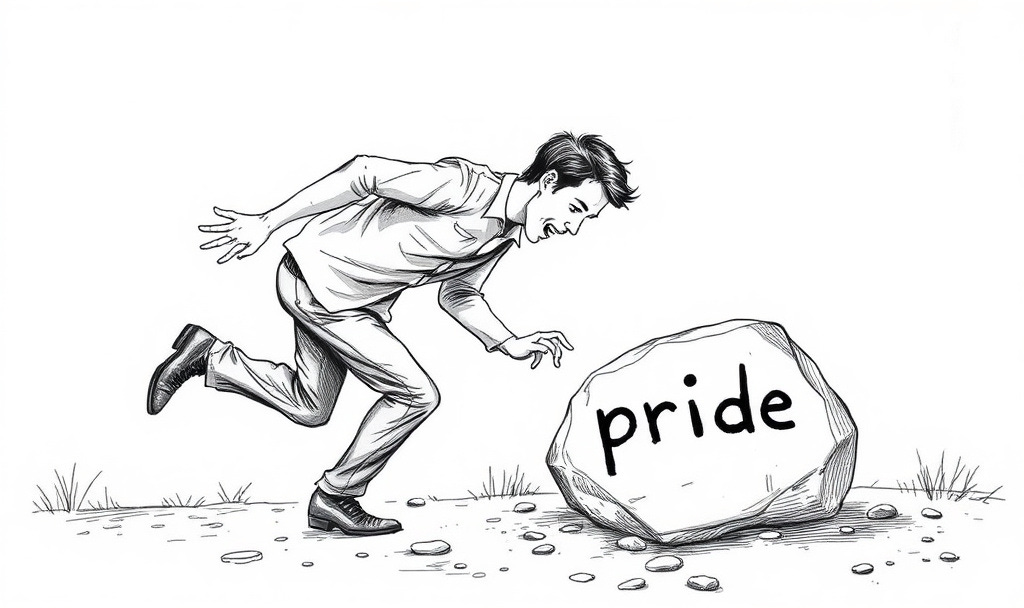
Pride Before a Fall
30 Days in Ruth and Esther - day 26

Proverbs places pride right at the top of the list of sins that God hates. It receives that kind of attention because it is the root of so many other sins. Pride leads to one bad outcome after another, and ultimately, it leads to destruction.
Pride creates a kind of spiritual blindness. It leads a man to do things he would never do if he were thinking clearly. That is why the Bible tells us that pride comes before a fall—and not only tells us, but shows us. One of the clearest examples of that principle is found in the story of Haman in the book of Esther.
Our passage begins with Haman full of joy. He believes he is being set up for even greater honor before the king. Esther has prepared a banquet, and Haman assumes he is the guest of honor.
There is nothing wrong with rejoicing when good things happen in our lives. But it is worth asking what lies underneath that joy. In Haman’s case, it was pride. We see that clearly because as soon as he sees Mordecai at the king’s gate, his joy disappears and he becomes sullen.
He goes home and boasts about his wealth, his status, and the honor being given to him. But in the end, he admits that none of it satisfies him as long as Mordecai refuses to honor him.
One of the signs of pride is this: you feel like you have to be universally praised, or you can’t be at peace.
Haman then listens to the counsel of his wife and friends and decides to build a gallows for Mordecai. This shows us another sign of a dangerously proud heart—when someone wounds your sense of self-importance and your response is extreme and over-the-top, pride is at work.
We see this kind of thing play out in everyday life. We call it road rage. One driver makes a simple mistake—cuts someone off, pulls out in front of them—and the offended driver overreacts. Then the other responds back, and it escalates. Back and forth it goes. And at the heart of it is a proud heart that says, “I am the most important person on the road.”
As the story continues, we will see how Haman’s pride leads to his downfall and ultimately to his death. But one simple truth stands out—if Haman had humbled himself, this never would have happened. His anger toward Mordecai would have died early. Lives would have been spared, including his own. He could have remained a trusted and honored advisor to the king.
If he had simply stopped and asked, “What does it really matter if one man does not honor me?”—or even better, if he had allowed Mordecai’s refusal to treat him like a god to remind him that he was not one—he would have been a better man for it.
The same is true for us. The person who offends your pride may actually be the person helping you grow in humility. Their motives are between them and the Lord. What matters for you is how you respond.
And the gospel frees us here. Because in Christ, we do not have to prove our importance or demand recognition from others. We are already known, already accepted, and already secure in Him.
If you let pride lead the way, the fall won’t be far behind.