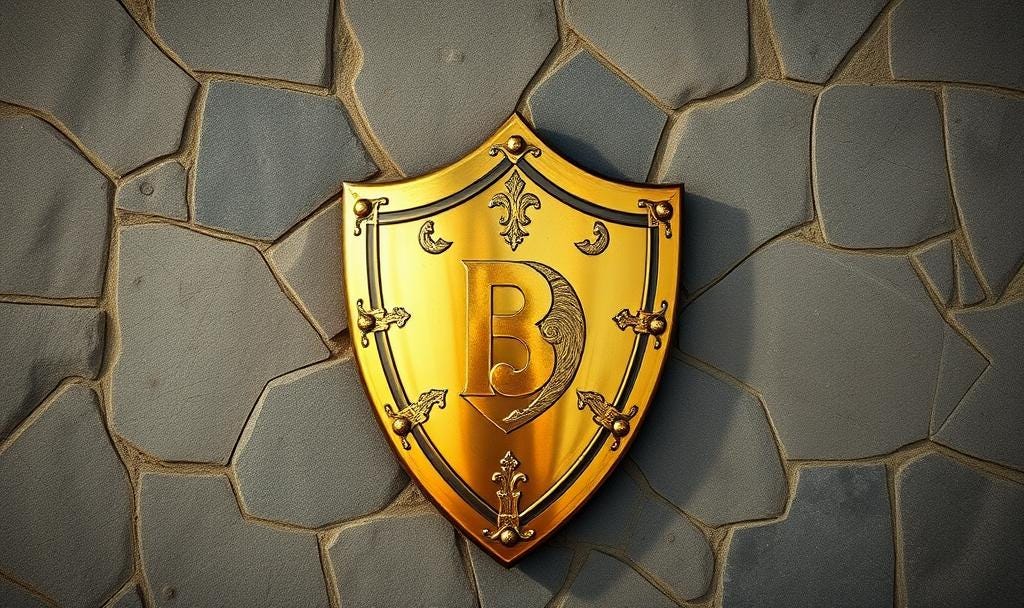
Shields of Bronze

Scripture Reading: 1 Kings 14-15; Psalm 132
"Shishak king of Egypt... took away all the shields of gold that Solomon made, and King Rehoboam made in their place shields of bronze…"
(1 Kings 14:25–27)
The shields mentioned here—both Solomon’s original gold ones and Rehoboam’s bronze replacements—were not for battle. They were ceremonial, symbols of prestige and power, displayed during royal processions. Solomon had them made during the height of his reign, when gold was abundant and his kingdom flourished.
But after Solomon’s death, his son Rehoboam quickly led the kingdom into division and decline. Following his disastrous decisions at Shechem, he was left ruling only Judah and Benjamin. Then Shishak, king of Egypt, came and plundered Jerusalem. Among the treasures he took were the golden shields—tangible emblems of Israel’s former glory.
Rehoboam’s response? He had new shields made—not of gold, but of bronze. They looked similar from a distance, but they were a pale imitation. Bronze instead of gold. Substitution instead of restoration. Appearance over substance.
It was an attempt to save face, to maintain the illusion that nothing had changed. But everything had changed. The shields of bronze were silent witnesses to a kingdom in decline and a king who had lost more than he dared admit.
We do the same. When we suffer loss—especially loss that stems from our own sin or foolishness—our instinct is often to cover it up. We reach for bronze when the gold is gone. We pretend. We maintain appearances. We craft an image of godliness that no longer reflects the reality of our hearts.
But God is not fooled. He knows what was taken. He knows what we lost. He sees the bronze.
So what should Rehoboam have done? What should we do?
The better path is the harder one: humility. Honesty. Confession. Rehoboam could have used the moment to repent, to seek the Lord’s grace and help. So can we.
Because God doesn’t deal in bronze imitations. He gives grace to the humble. And what we need most is not the approval of others—it’s the restoring, undeserved, and deeply real grace of God.
“God resists the proud, but gives grace to the humble.”
(James 4:6)