The Great Exchange

Scripture Reading: Leviticus 7-9; Matthew 27; Psalm 39
"At that time they had a notorious prisoner, called Jesus Barabbas. So after they had gathered, Pilate said to them, 'Whom do you want me to release for you, Jesus Barabbas or Jesus who is called the Messiah?'" (The NRSV, as well as others, call Barabbas “Jesus Barabbas” as some early manuscripts say this was his name. This would explain why Pilate was calling Jesus “Jesus the Christ,” and Barabbas was called Barabbas and not simply “Jesus.” He had two men named Jesus standing before the crowd and he was making a distinction between them.)
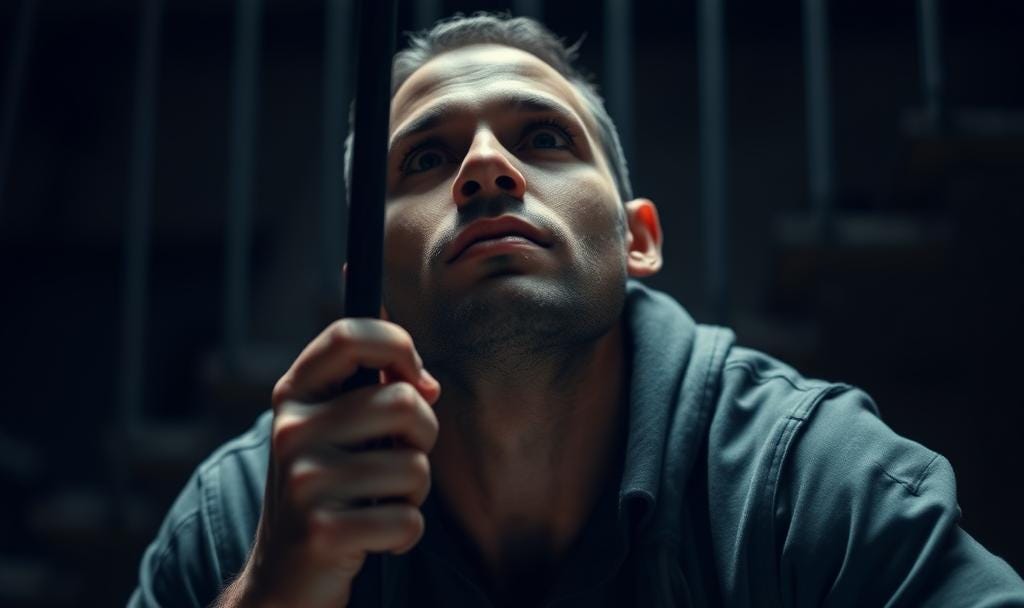
On the morning of Jesus’ crucifixion, Pilate presented the crowd with a choice: Jesus Barabbas, a notorious prisoner, or Jesus Christ, the innocent Son of God. It was a moment of decision—one man would be set free, the other condemned.
Barabbas, whose name means “son of the father,” was guilty. He was a rebel, a murderer, a man who had rightly earned his chains. And yet, when the people shouted for his release, he walked free. Jesus, the true Son of the Father, took his place.
This is the gospel in a single moment. We are Barabbas—guilty, bound by sin, deserving of judgment. Yet Jesus took our penalty upon Himself. The innocent for the guilty. The righteous for the unrighteous. The true Son of God condemned so that we, wayward sons and daughters, could be set free.
The great exchange is at the heart of our salvation:
He bore our punishment so that we could receive His righteousness (2 Corinthians 5:21).
He was bound so that we could be set free (John 8:36).
He was forsaken so that we could be brought near (Matthew 27:46).
Barabbas fades from the pages of Scripture, but his story is ours. He went free because Jesus took his place. Have you embraced the One who took yours?
Prayer: Lord Jesus, I stand in awe of Your love. I was guilty, yet You took my place. I was bound, yet You set me free. Help me to never take for granted the price You paid. May I live in gratitude and faithfulness to You. Amen.